
Detail
Flat roofs
  • Inverted roof
  • Hot roof
Sloped roofs
  • Sloped roofs with ventilated gap below membrane
  • Insulation of sloped roofs on wood beams
  • Sloped roofs with ventilated gap over membrane
  • Microventilated roofs
Cavity walls insulation
  • Cavity walls
Exterior insulation
  • Ventilated walls
  • External insulation
Interior insulation
  • Interior
Walls below ground
  • Walls below ground
Residential floors
  • Floors
Industrial floors
  • Cold storage rooms floors
Thermal bridges
  • Insulation of thermal bridges
Isothermal trucks
  • Isothermal trucks
Infills and renovations in humid rooms
  • Infills and renovations in humid rooms
Sandwich panel
  • Sandwich panel
Ediltec Gibitec ES parete 1 1

INTERIOR INSULATION

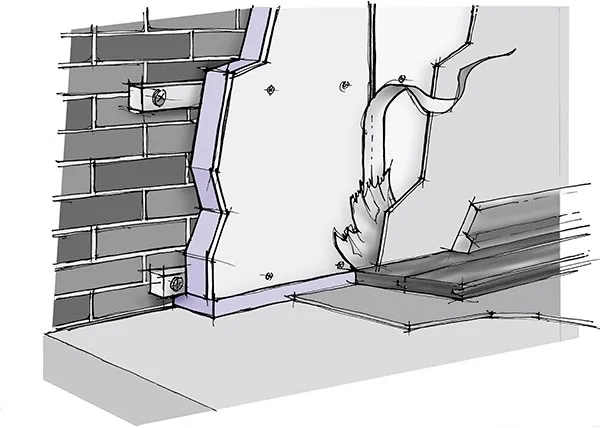
Internal wall insulation, also known as dry lining, improves the thermal performance of external walls by installing the insulation on the internal side of the building envelope, facing the heated space.

This solution is particularly useful in building renovation projects where the external façade cannot or should not be modified, for example because of architectural constraints, condominium requirements or the need to carry out work on individual rooms or housing units.

Insulating from the inside increases the internal surface temperature of the external wall, helping to improve thermal comfort and reduce heat transfer through the building envelope. Since the insulation separates part of the existing wall mass from the conditioned space, rooms can also respond more quickly to intermittent heating, making the solution particularly interesting for spaces that are not continuously occupied.

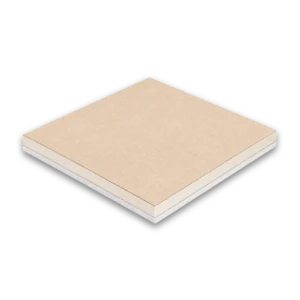
GIBITEC® ES is a prefabricated composite panel specifically designed for internal wall insulation. It combines a 10 or 13 mm plasterboard facing with a layer of skinless X-FOAM® extruded polystyrene (XPS) in a single ready-to-install element.


The XPS insulation component combines thermal performance with low water absorption and high mechanical properties, while the plasterboard provides an internal surface ready for the subsequent finishing operations.

Ediltec icona posa in opera

Laying

Before installation, the existing wall must be stable, sufficiently flat, clean and suitable for the selected fixing method. Any existing water infiltration or persistent moisture...

Ediltec icona vantaggi

Advantages

The advantages of insulating from the inside are: - Clean working - Laying not affected by weather conditions - Higher surface temperatures and hence greater comfort - No...

Ediltec icona avvertenze

Warnings

Internal insulation changes the temperature and moisture conditions within the existing external wall. The complete wall build-up should therefore be assessed from a hygrothermal...

Ediltec icona faq

Frequently asked questions - faq

Can both XPS and PIR be used for external wall insulation?

Yes, suitable XPS and PIR products can be incorporated into compatible external wall insulation systems. Product selection depends on thermal requirements, substrate, façade system and project-specific performance requirements.

Why is XPS suitable for below-ground wall insulation?

XPS combines low water absorption, thermal performance and high compressive strength, making it suitable for external insulation of below-ground walls exposed to soil and mechanical stresses.

What functions does POLIISO® TEGOLA combine in a pitched roof?

POLIISO® TEGOLA combines PIR thermal insulation, integrated metal tile-support profiles and openings for under-tile micro-ventilation in a single roofing element.

How does X-FOAM® EASY TEGOLA contribute to under-tile ventilation?

X-FOAM® EASY TEGOLA incorporates longitudinal grooves on its upper surface that create channels for under-tile micro-ventilation, while transverse grooves are designed to accommodate the tile arrangement.

Recommended products...

Technical Insights

This site is registered on wpml.org as a development site. Switch to a production site key to remove this banner.