
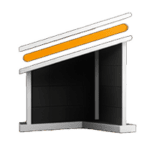
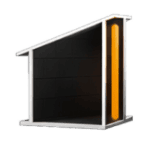
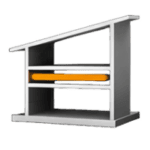

Detail
Flat roofs
  • Inverted roof
  • Hot roof
Sloped roofs
  • Sloped roofs with ventilated gap below membrane
  • Insulation of sloped roofs on wood beams
  • Sloped roofs with ventilated gap over membrane
  • Microventilated roofs
Cavity walls insulation
  • Cavity walls
Exterior insulation
  • Ventilated walls
  • External insulation
Interior insulation
  • Interior
Walls below ground
  • Walls below ground
Residential floors
  • Floors
Industrial floors
  • Cold storage rooms floors
Thermal bridges
  • Insulation of thermal bridges
Isothermal trucks
  • Isothermal trucks
Infills and renovations in humid rooms
  • Infills and renovations in humid rooms
Sandwich panel
  • Sandwich panel

FAQ - Questions and answers

Can both XPS and PIR be used for external wall insulation?

Yes, suitable XPS and PIR products can be incorporated into compatible external wall insulation systems. Product selection depends on thermal requirements, substrate, façade system and project-specific performance requirements.

Why is XPS suitable for below-ground wall insulation?

XPS combines low water absorption, thermal performance and high compressive strength, making it suitable for external insulation of below-ground walls exposed to soil and mechanical stresses.

What functions does POLIISO® TEGOLA combine in a pitched roof?

POLIISO® TEGOLA combines PIR thermal insulation, integrated metal tile-support profiles and openings for under-tile micro-ventilation in a single roofing element.

How does X-FOAM® EASY TEGOLA contribute to under-tile ventilation?

X-FOAM® EASY TEGOLA incorporates longitudinal grooves on its upper surface that create channels for under-tile micro-ventilation, while transverse grooves are designed to accommodate the tile arrangement.

Which insulation is suitable for parking and carriageable inverted roofs?

High-compressive-strength XPS, such as X-FOAM® HBT 500 or HBT 700, is suitable for inverted roof systems designed to support vehicle traffic. The appropriate grade must be selected according to the loads and complete structural build-up.

Can paving be installed directly over XPS insulation?

The arrangement depends on the selected roof system. Paving, supports, drainage and load-distribution layers must be designed to transfer pedestrian loads correctly without damaging the insulation or waterproofing system.

Why is XPS used for treadable inverted roofs?

XPS combines low water absorption with the compressive strength required for use beneath correctly designed pedestrian roof build-ups. The insulation is installed above the waterproofing membrane and below the upper paving or load-distribution layers.

Can rainwater reach the waterproofing membrane in an inverted roof?

Yes. Water can pass through the joints between XPS boards and reach the waterproofing layer below. This behaviour should be considered when calculating the thermal performance and designing the complete inverted roof system.

What insulation is suitable for a non-treadable inverted roof?

XPS insulation is particularly suitable for inverted roofs because it combines low water absorption, thermal performance and mechanical resistance. In an inverted roof, the XPS insulation is installed above the waterproofing membrane, helping protect it from temperature variations and mechanical stresses.

What applications is X-FOAM® TRC designed for?

X-FOAM® TRC is a skinless XPS insulation board with longitudinal surface grooves and a large 600 × 3000 mm format. It is particularly suited to industrial applications such as sandwich panels and insulated components for isothermal vehicles.

How does X-FOAM® EASY TEGOLA promote under-tile micro-ventilation?

X-FOAM® EASY TEGOLA incorporates three longitudinal grooves designed to promote air circulation beneath the tile covering. Transverse grooves are also provided to accommodate the tiles, integrating insulation, micro-ventilation and tile positioning within the same XPS board.

What is the difference between POLIISO® TEGOLA DOPPIO PASSO and POLIISO® TEGOLA?

POLIISO® TEGOLA DOPPIO PASSO has a compact length of 1180 mm and a width corresponding to twice the tile pitch. It incorporates two metal tile-support profiles, while its shorter format facilitates handling, storage and positioning compared with the 2400 mm TEGOLA version.

How does POLIISO® TEGOLA combine insulation and tile support?

POLIISO® TEGOLA combines a PIR insulation core with an integrated metal tile-support profile. The panel also incorporates openings designed to promote micro-ventilation beneath the tile covering, integrating multiple functions within the pitched-roof system.

What is the difference between GIBITEC® PLUS and GIBITEC® ES?

Both products combine thermal insulation with plasterboard, but they use different insulation materials. GIBITEC® PLUS incorporates POLIISO® PLUS PIR insulation with λD 0.022 W/mK, while GIBITEC® ES incorporates X-FOAM® extruded polystyrene (XPS).

What is GIBITEC® ES made of?

GIBITEC® ES is a prefabricated composite insulation panel combining a 10 or 13 mm plasterboard layer with skinless X-FOAM® extruded polystyrene (XPS). It is designed primarily for the thermal insulation and internal lining of walls.

Can POLIISO® VV be used with both synthetic and bituminous roofing membranes?

Yes. POLIISO® VV is suitable for warm-roof applications beneath both synthetic and bituminous membranes. It can also be used on metal decks, ventilated pitched roofs and warm green roofs.

What distinguishes POLIISO® VV HD from standard POLIISO® VV?

POLIISO® VV HD is the high-density version, with a compressive strength of ≥ 200 kPa compared with ≥ 150 kPa for POLIISO® VV. It retains saturated glass-fibre facings on both sides and is suitable for different roofing applications.

What is the difference between POLIISO® SB HD and POLIISO® SB?

The main difference is mechanical performance. POLIISO® SB HD is the high-density version and provides a compressive strength of ≥ 200 kPa, compared with ≥ 150 kPa for POLIISO® SB.

Can POLIISO® SB be used beneath torch-applied bituminous membranes?

Yes. POLIISO® SB has a bituminised glass-fibre upper facing and is suitable for applications beneath torch-applied bituminous membranes. Its maximum operating temperature is 110 °C.

Why choose POLIISO® PLUS when insulation thickness is limited?

POLIISO® PLUS has a declared thermal conductivity λD of 0.022 W/mK. This allows high thermal resistance to be achieved with relatively limited PIR thickness, making it suitable for roof, wall and floor insulation applications.

What is the reaction-to-fire classification of POLIISO® FB?

POLIISO® FB is classified Euroclass B-s1,d0 according to EN 13501-1. The panel combines a rigid PIR insulation core with specific glass-fibre-based facings and is suitable for applications including ventilated façades and roofs.

What are the main technical characteristics of POLIISO® AD?

POLIISO® AD is a PIR insulation panel with embossed aluminium facings, a declared thermal conductivity λD of 0.022 W/mK and compressive strength ≥ 150 kPa. It is classified Euroclass D-s2,d0 according to EN 13501-1.

Where can POLIISO® ED be used?

POLIISO® ED is a PIR insulation panel faced with saturated mineralised glass fibre. It can be used in several roof and wall applications, including warm roofs beneath synthetic membranes, metal decks, ventilated pitched roofs and external wall insulation.

What thermal performance does POLIISO® EXTRA provide?

POLIISO® EXTRA is a rigid polyisocyanurate (PIR) insulation panel with a declared thermal conductivity λD of 0.022 W/mK. Its low thermal conductivity allows high thermal resistance to be achieved with relatively limited insulation thickness.

What distinguishes X-FOAM® WAFER from a standard XPS insulation board?

X-FOAM® WAFER features a distinctive wafer-patterned surface and four straight edges. It is available in thicknesses from 20 to 240 mm and is suitable for applications including external walls, thermal bridges and soffit insulation over open or unheated spaces.

Why is X-FOAM® MLB manufactured without extrusion skin?

X-FOAM® MLB is a skinless XPS board designed for applications where the insulation is processed or incorporated into other elements. Its 600 × 3000 mm format makes it suitable for sandwich panels, isothermal vehicles and other industrial applications.

What are the main characteristics of X-FOAM® LMF?

X-FOAM® LMF is a large-format XPS insulation board measuring 600 × 2800 mm and featuring four tongue-and-groove edges. Depending on thickness, its compressive strength ranges from ≥ 200 to ≥ 300 kPa.

What makes X-FOAM® HBT 700 suitable for high-load applications?

X-FOAM® HBT 700 provides a compressive strength of ≥ 700 kPa, making it suitable for insulation applications subject to high mechanical loads, including industrial floors, carriageable roofs and under-foundation insulation.

When should X-FOAM® HBT 500 be selected?

X-FOAM® HBT 500 is designed for applications requiring higher mechanical performance, with a compressive strength of ≥ 500 kPa. Typical uses include industrial floors, cold storage rooms, below-ground walls and carriageable inverted roofs.

What is the difference between X-FOAM® HBT and a straight-edge XPS board?

X-FOAM® HBT features four shiplap edges, allowing adjacent boards to overlap along their perimeter. It provides a compressive strength of ≥ 300 kPa and is available in thicknesses from 30 to 240 mm.

What is X-FOAM® HBD used for?

X-FOAM® HBD is an extruded polystyrene (XPS) insulation board with a compressive strength of ≥ 300 kPa. It is suitable for several building-envelope applications, including roofs, ventilated walls, suspended floors and radiant floor systems.

This site is registered on wpml.org as a development site. Switch to a production site key to remove this banner.