

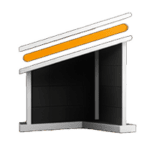
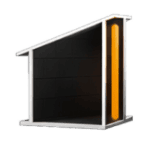
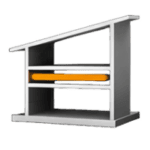

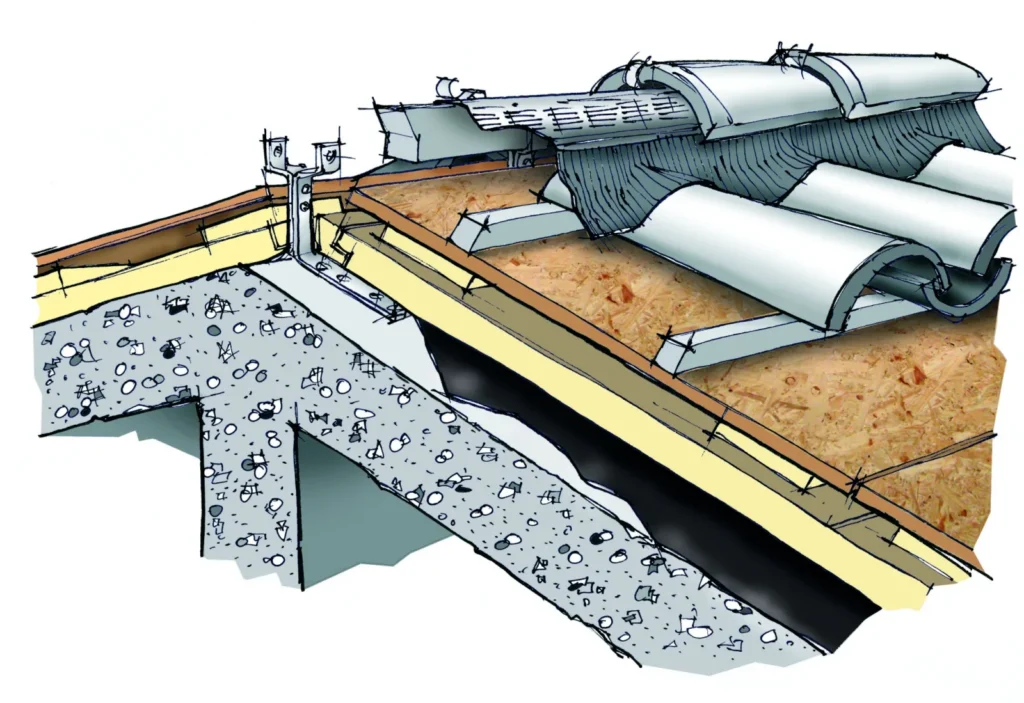
A ventilated pitched roof incorporates a continuous air space between the thermal insulation and the external roof covering. This cavity allows air to circulate beneath the covering, typically entering near the eaves and leaving towards the ridge through natural convection.
During warm periods, solar radiation can significantly increase the temperature of the external roof covering. The ventilated cavity helps dissipate part of the heat accumulated beneath the covering, reducing the thermal load transmitted towards the underlying roof layers.
Ventilation can also assist in the management and drying of incidental moisture that may reach the space beneath the roof covering, provided that the cavity and roof details are correctly designed.
The ventilation layer is generally created above the thermal insulation through an appropriate system of counter-battens and battens supporting the external roof covering.
Thermal insulation, ventilation cavity, membranes and roof covering must be considered together as part of a complete roof build-up, designed to provide thermal performance, moisture management and weather protection.