

Detail
Flat roofs
  • Inverted roof
  • Hot roof
Sloped roofs
  • Sloped roofs with ventilated gap below membrane
  • Insulation of sloped roofs on wood beams
  • Sloped roofs with ventilated gap over membrane
  • Microventilated roofs
Cavity walls insulation
  • Cavity walls
Exterior insulation
  • Ventilated walls
  • External insulation
Interior insulation
  • Interior
Walls below ground
  • Walls below ground
Residential floors
  • Floors
Industrial floors
  • Cold storage rooms floors
Thermal bridges
  • Insulation of thermal bridges
Isothermal trucks
  • Isothermal trucks
Infills and renovations in humid rooms
  • Infills and renovations in humid rooms
Sandwich panel
  • Sandwich panel

How to Improve Summer Thermal Comfort in Buildings

Building Envelope

Thermal Time Lag and Thermal Attenuation

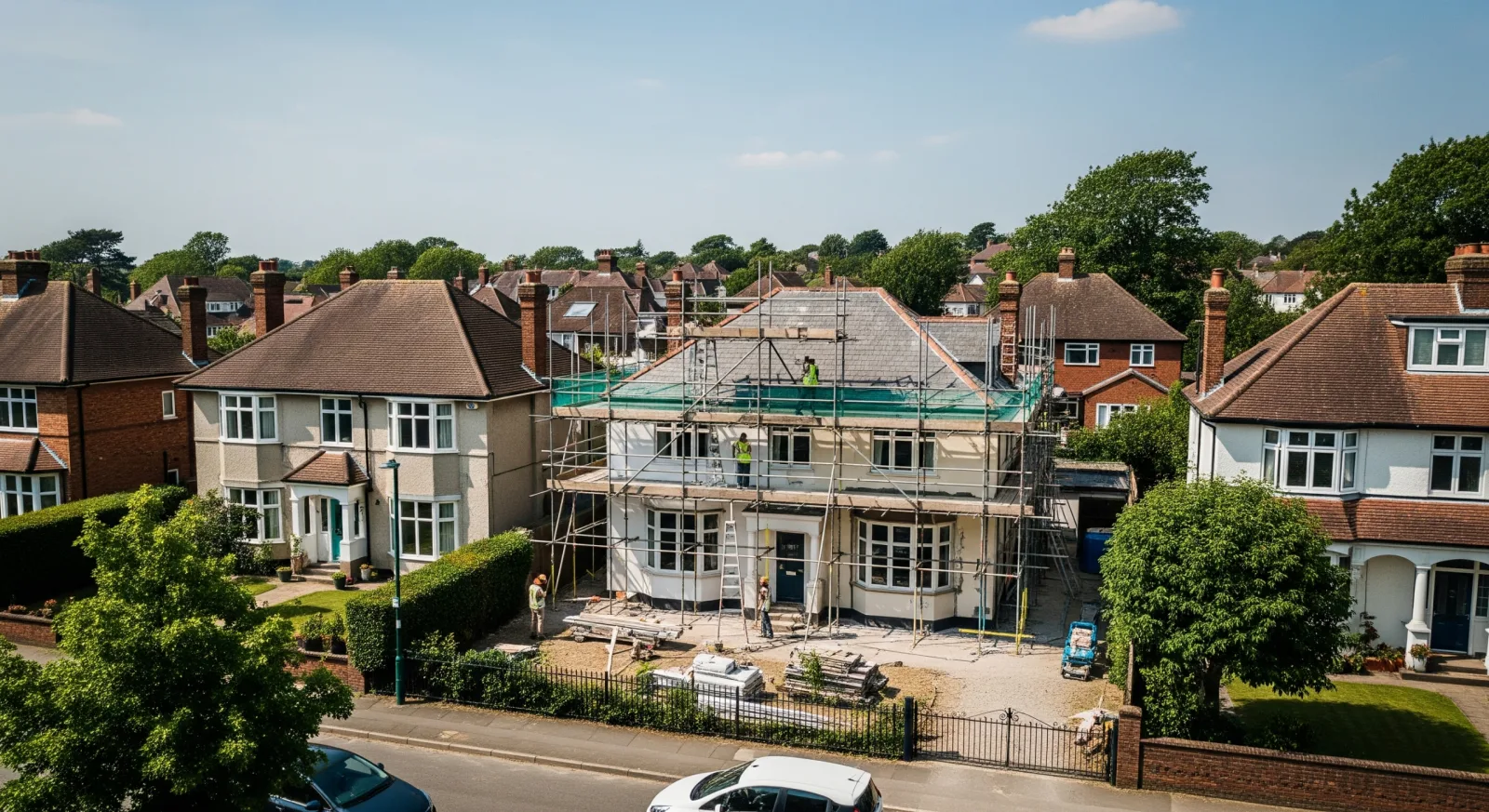
Ediltec-esmpio-di-casa-in-ristrutturazione-db19e2de

In modern thermal insulation, summer thermal comfort has become one of the most important aspects of building envelope design.

Improving Indoor Thermal Comfort

With rising temperatures and increasingly frequent summer overheating, reducing heat loss during winter is no longer enough. Building envelope systems must also be designed to control the dynamic behaviour of heat during the hottest hours of the day.

In this context, several parameters play a key role:

  • thermal time lag;
  • thermal attenuation;
  • periodic thermal transmittance;
  • thermal inertia of the building envelope.

Contrary to a common misconception, achieving high levels of summer thermal performance does not depend solely on the thermal mass of the building. Lightweight systems incorporating high-performance insulation materials, such as:

  • polyurethane foam;
  • extruded polystyrene (XPS),

can also provide excellent results in terms of summer thermal comfort and heat-flow reduction.

What Is Thermal Time Lag?

When discussing summer thermal comfort, one of the most important parameters is thermal time lag, which is the time required for the peak temperature occurring on the external surface of a wall or roof to affect the indoor environment.

In other words, it measures the delay with which heat passes through the different layers of the building envelope. The longer this time interval, the later the heat accumulated during the hottest hours of the day reaches the interior, ideally during the evening or night, when outdoor temperatures are generally lower and the building can release heat more effectively.

Thermal time lag is therefore a key parameter when designing the summer thermal performance of walls, roofs and floors.

Thermal Attenuation: It’s Not Just About When the Heat Arrives

Alongside thermal time lag, it is essential to consider thermal attenuation, which describes the ability of a building structure to reduce the intensity of the heat flow passing through the building envelope over a 24-hour period.

A well-designed building envelope does not simply delay the transfer of heat: it also reduces the amount of heat that reaches the indoor environment.

This results in more stable indoor temperatures, reduced reliance on summer air conditioning and significantly lower energy consumption, providing benefits in terms of both operating costs and indoor thermal comfort.

The Italian Ministerial Decree of 26 June 2015 Changed the Approach to Summer Thermal Comfort

For many years, summer thermal comfort was considered to depend almost exclusively on the mass of building structures. Heavy walls were regarded as the primary solution for limiting overheating inside buildings.

With the introduction of the Italian Ministerial Decree of 26 June 2015 (DM 26 June 2015), this approach was partially superseded.

The regulation introduced a more comprehensive assessment of the dynamic thermal behaviour of the building envelope, recognising that lightweight structures can also provide excellent summer thermal performance when properly designed.

High thermal resistance provided by insulation, the use of ventilated cavities and the correct design of the overall building envelope can achieve results comparable to, or even better than, those obtained simply by increasing the mass of the wall.

Surface Mass or Periodic Thermal Transmittance?

For external vertical walls located in areas with higher levels of solar radiation, designers can demonstrate compliance with summer thermal performance requirements using two different approaches provided by Italian regulations.

The first approach consists of using a wall with a surface mass greater than 230 kg/m².

The second, increasingly common approach involves verifying the periodic thermal transmittance (YIE). For lightweight walls, this value must be lower than 0.10 W/m²K.

This means that a lightweight wall can provide excellent summer thermal performance without necessarily increasing its mass, provided that the overall wall build-up is correctly designed.

Roofs: Why YIE Is a Key Parameter

For roofs, the regulatory approach is even more direct.

Regardless of the mass of the structure, periodic thermal transmittance (YIE) must be assessed. For both flat and pitched roofs, the value must be lower than 0.18 W/m²K.

This parameter describes the ability of the roof build-up to limit heat transfer during the daily thermal cycle and is therefore one of the key indicators for assessing summer thermal performance.

Summer Thermal Comfort: It’s Not Just About Thermal Mass

The idea that a very heavy wall automatically provides better summer thermal performance is now considered outdated.

Modern dynamic thermal simulations show that the performance of the building envelope depends on the interaction of several factors, including:

  • insulation quality;
  • thermal resistance of the building envelope;
  • ventilation;
  • ability to attenuate heat flow;
  • correct sizing of the individual layers.

For this reason, today it is more appropriate to refer to the dynamic thermal performance of the building envelope, rather than considering thermal inertia alone.

PIR and XPS: High-Performance Insulation for Summer Conditions

PIR polyurethane and XPS extruded polystyrene insulation panels are often associated with the winter thermal performance of buildings, but they also play an important role in the summer performance of the building envelope.

Thanks to their high thermal resistance, these materials help limit the heat flow passing through walls and roofs, contributing to improved thermal attenuation and reduced overheating of indoor spaces.

The effectiveness of the system naturally depends on the overall design of the building envelope, but the use of high-performance insulation materials makes it possible to achieve excellent thermal performance even with reduced insulation thicknesses.

Why Higher Thermal Resistance Improves Summer Thermal Comfort

One aspect that is often underestimated is the relationship between thermal resistance and heat flow.

Increasing the thermal resistance of the building envelope reduces the amount of heat energy that can pass through the structure.

The result is less overheating of indoor spaces and a reduced energy demand for cooling, without necessarily requiring particularly heavy building structures.

Ventilation Complements the Performance of Thermal Insulation

Thermal insulation is only one of the factors that determine the summer thermal performance of a building.

Ventilated roofs and ventilated façades help dissipate part of the heat generated by solar radiation, reducing the surface temperature of the building envelope and further improving indoor thermal comfort.

When insulation, ventilation and the design of the building envelope are developed as an integrated system, it is possible to achieve buildings with excellent dynamic thermal performance.

Newsletter

I do accept the privacy policy conditions and I do accept to receive commercial newsletter on Ediltec products.
Discover more

Related articles

Expanded Polyurethane

POLIISO® TEGOLA

Under-tile roof insulation Insulating a pitched roof requires a solution capable of combining high thermal performance, ease of installation and long-term reliability. This is why…
Building Envelope

Why Polyurethane?

Why choose a PIR insulation board? The characteristics that make the difference When it comes to thermal insulation, the choice of material has a direct…
DOPPIO PASSO

POLIISO® TEGOLA DOPPIO PASSO: A More Practical Format for Roof Insulation

The new 1,190 mm format designed to make installation easier In roof insulation, innovation is not only about thermal performance. Design details can make a…
This site is registered on wpml.org as a development site. Switch to a production site key to remove this banner.