
Detail
Flat roofs
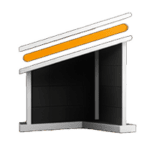
  • Inverted roof
  • Hot roof
Sloped roofs
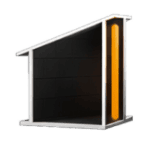
  • Sloped roofs with ventilated gap below membrane
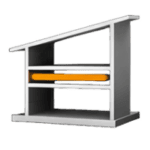
  • Insulation of sloped roofs on wood beams
  • Sloped roofs with ventilated gap over membrane
  • Microventilated roofs
Cavity walls insulation
  • Cavity walls
Exterior insulation
  • Ventilated walls
  • External insulation
Interior insulation
  • Interior
Walls below ground
  • Walls below ground
Residential floors
  • Floors
Industrial floors
  • Cold storage rooms floors
Thermal bridges
  • Insulation of thermal bridges
Isothermal trucks
  • Isothermal trucks
Infills and renovations in humid rooms
  • Infills and renovations in humid rooms
Sandwich panel
  • Sandwich panel
Ediltec POLIISO VV Tetto caldo 1

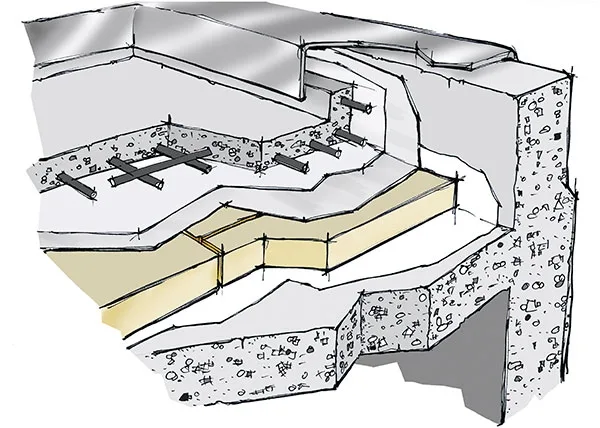
THERMAL INSULATION FOR HOT FLAT ROOFS UNDER SYNTHETIC MEMBRANE

A warm flat roof with a synthetic membrane is a roofing system in which the thermal insulation is installed below the waterproofing layer. This configuration keeps the insulation protected beneath the membrane and separates it from direct exposure to rainwater during normal service.

Synthetic waterproofing membranes are available in different materials and configurations and may be reinforced or unreinforced depending on the specific system. The compatibility between the membrane, thermal insulation, fastening or bonding method and other components of the roof build-up must therefore be considered during design.


Rigid polyisocyanurate (PIR) insulation is particularly suitable for warm flat roofs because it combines high thermal performance with good mechanical properties and can be supplied with facings designed for integration with different waterproofing systems.


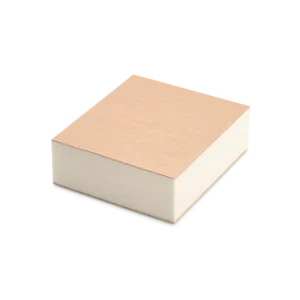
POLIISO® VV is a PIR insulation panel faced on both sides with saturated glass fibre. It has a declared thermal conductivity λD ranging from 0.025 to 0.028 W/mK depending on thickness, a compressive strength of ≥ 150 kPa and is available in thicknesses from 20 to 140 mm.

Its configuration makes POLIISO® VV suitable for warm flat roofs beneath compatible synthetic waterproofing membranes, providing a stable thermal insulation layer within the roof build-up.

Ediltec icona posa in opera

Laying

The joints between the coating's components are achieved by hot welding or with solvents... A quantity of about 1.5-2 kg/m2 is spread evenly on the surface to be bonded... When...

Ediltec icona vantaggi

Advantages

The advantage of this solution lies in the fact that is well known and has been widely used for a long time thus reducing any possible errors. The insulation is always protected...

Ediltec icona avvertenze

Warnings

Please bear in mind that extruded polystyrene and expanded Styrofoam CANNOT RESIST to temperatures over 80°C..." "Special attention is to be paid when laying these products in...

Ediltec icona faq

Frequently asked questions - faq

Can both XPS and PIR be used for external wall insulation?

Yes, suitable XPS and PIR products can be incorporated into compatible external wall insulation systems. Product selection depends on thermal requirements, substrate, façade system and project-specific performance requirements.

Why is XPS suitable for below-ground wall insulation?

XPS combines low water absorption, thermal performance and high compressive strength, making it suitable for external insulation of below-ground walls exposed to soil and mechanical stresses.

What functions does POLIISO® TEGOLA combine in a pitched roof?

POLIISO® TEGOLA combines PIR thermal insulation, integrated metal tile-support profiles and openings for under-tile micro-ventilation in a single roofing element.

How does X-FOAM® EASY TEGOLA contribute to under-tile ventilation?

X-FOAM® EASY TEGOLA incorporates longitudinal grooves on its upper surface that create channels for under-tile micro-ventilation, while transverse grooves are designed to accommodate the tile arrangement.

Recommended products...

Technical Insights

This site is registered on wpml.org as a development site. Switch to a production site key to remove this banner.